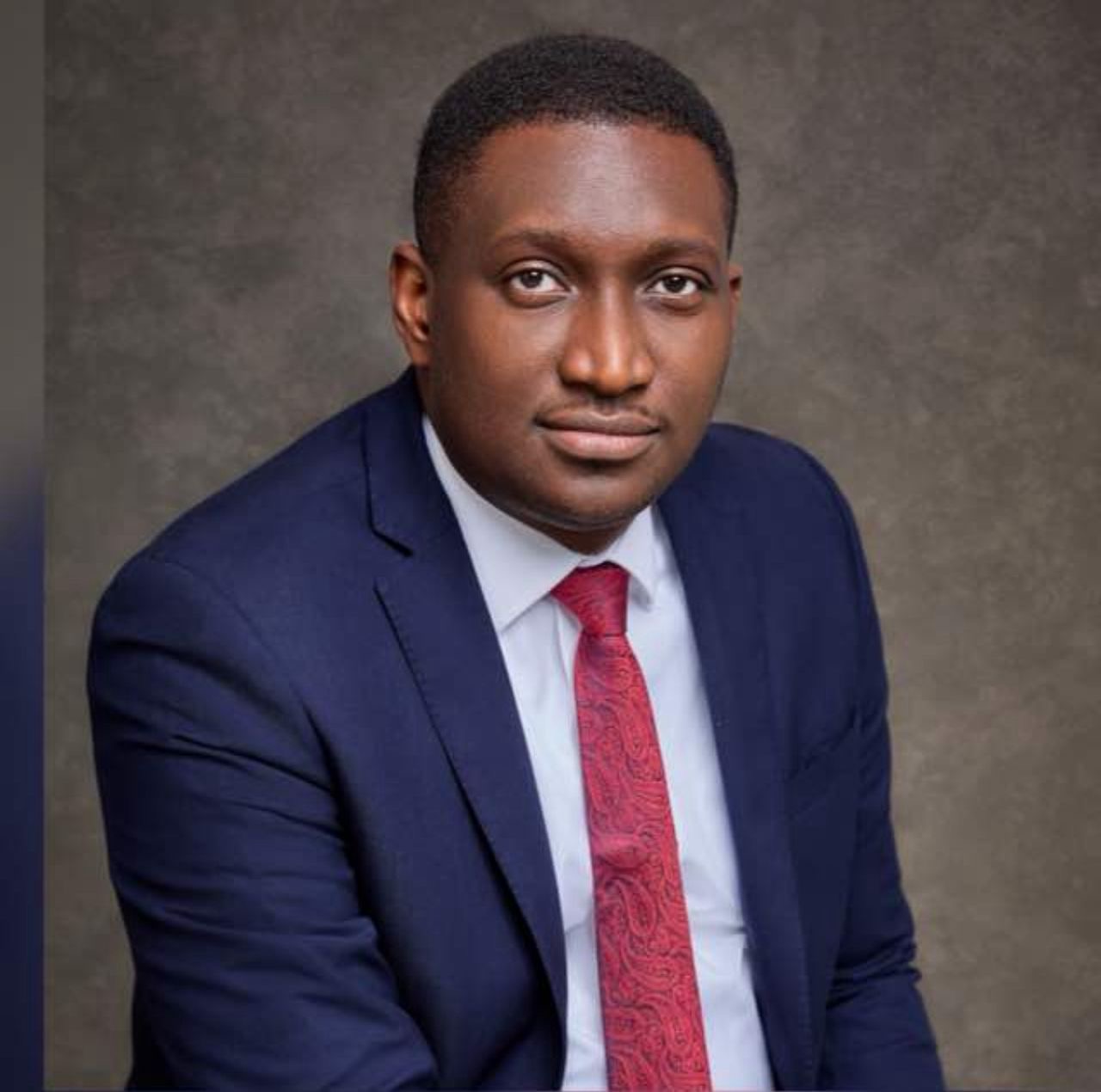
chief financial officer · Budpay
Your career spans medicine, chartered accountancy, taxation, fintech, and banking. How would you describe the leadership thread that connects these worlds?
At the core, my career has always been about understanding systems and responsibility. Medicine trained me to think holistically and to appreciate the consequences of decisions on people. Accounting and taxation sharpened my ability to impose structure, manage risk, and preserve value. Fintech and banking became the environments where those disciplines were tested at scale.
Each transition was intentional. I was drawn to roles where governance mattered, where decisions carried weight, and where leadership required both technical depth and sound judgement. That systems thinking has remained constant throughout my journey.
You served as Chief Financial Officer in a Nigerian fintech that achieved unicorn status. What differentiates financial leadership at that level?
Scale amplifies everything. At unicorn level, growth alone is not success. Discipline is. My role was to ensure that rapid expansion was supported by strong financial controls, credible reporting, and regulatory readiness.
This involved strengthening internal governance, improving cost efficiency, reducing losses, supporting capital raises, and ensuring transparency for investors and regulators. In one instance, we reduced chargeback losses by over seventy percent through tighter controls and improved oversight. At that level, financial leadership is about protecting the institution while enabling ambition.
You have also led organisations as Chief Executive Officer and Managing Director, particularly within microfinance and banking. What impact are you most proud of in those roles?
Institutional transformation stands out for me. I have led organisations through restructuring, acquisition, and growth, often in challenging environments. This included restoring balance sheets from negative to positive positions within months, reducing liabilities by more than half, expanding loan portfolios from inception to scale, and improving capital bases by over three hundred percent.
Beyond the numbers, the most meaningful impact was restoring confidence among investors, regulators, employees, and customers. When an institution regains credibility, it creates a foundation for sustainable growth.
Alongside executive leadership, you spent nearly a decade lecturing ACCA. Why was this important to you?
Teaching has always been about legacy. Lecturing ACCA required me to distil complex concepts into clarity and to remain intellectually rigorous. Over the years, I taught thousands of students who now occupy leadership positions across finance and industry.
Education keeps you grounded. It reinforces the responsibility that comes with expertise and reminds you that leadership is not only about personal achievement, but about building capability within the ecosystem.
You have received several professional recognitions over the course of your career. Which achievements stand out most to you, and why?
Recognition is meaningful when it reflects impact rather than visibility. The moments that stand out most are those tied to measurable outcomes. These include leading organisations through successful restructurings, being entrusted with senior leadership roles in highly regulated environments, and contributing to institutions that achieved market defining scale.
Professional recognition from peers, regulators, and boards has been particularly important to me because it signals trust. It affirms that the work being done is credible, responsible, and aligned with long term value creation.
As an Executive MBA graduate of London Business School, how has global exposure shaped your approach to leadership in Nigeria?
The programme sharpened my strategic thinking and exposed me to diverse leadership styles and markets. It reinforced the importance of context. Global best practice must be adapted intelligently to local realities.
In Nigeria, this means balancing innovation with regulation, ambition with governance, and speed with discipline. That global perspective helps me make sound decisions in complex and fast moving environments.
What defines effective leadership in today’s complex financial and regulatory landscape?
Effective leadership today requires depth rather than visibility. Leaders must understand regulation, capital, technology, and people, and how these elements interact. It also requires humility, continuous learning, and the discipline to build institutions that can withstand scrutiny and volatility.
Leadership is no longer about titles. It is about stewardship, credibility, and the ability to create systems that endure beyond the individual.